
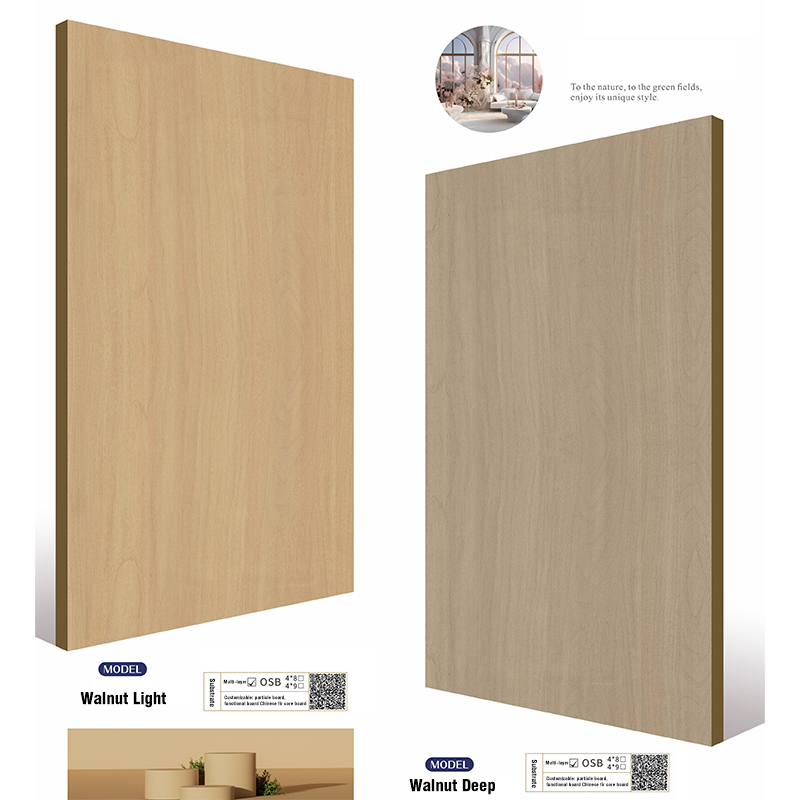
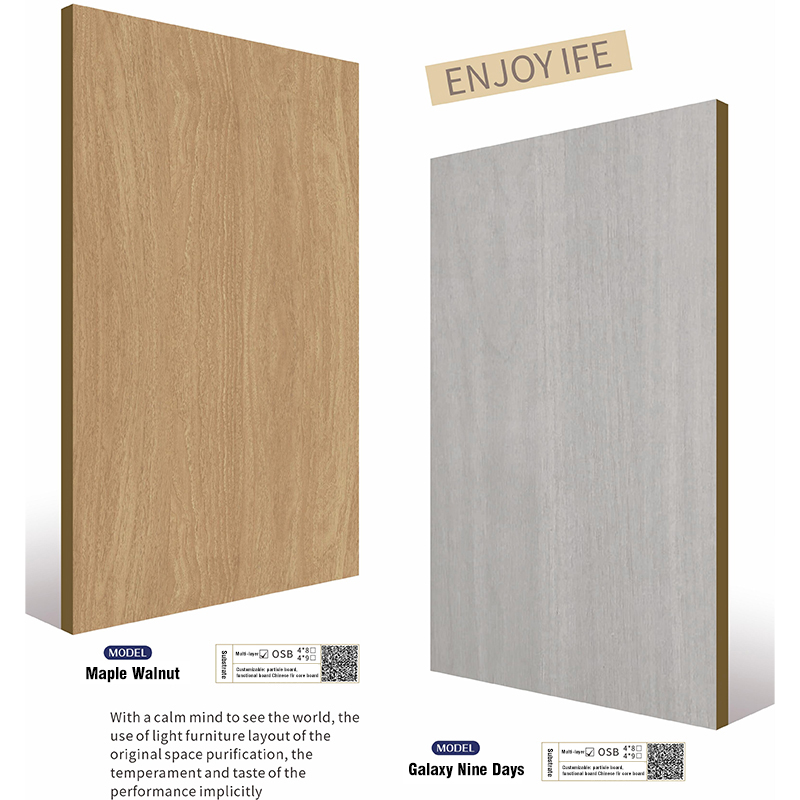
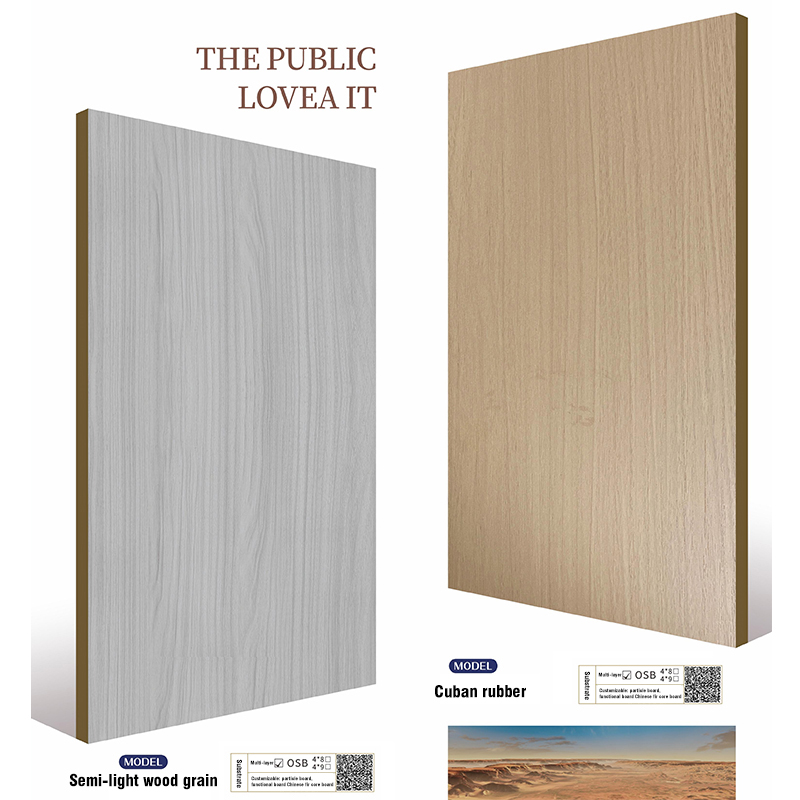
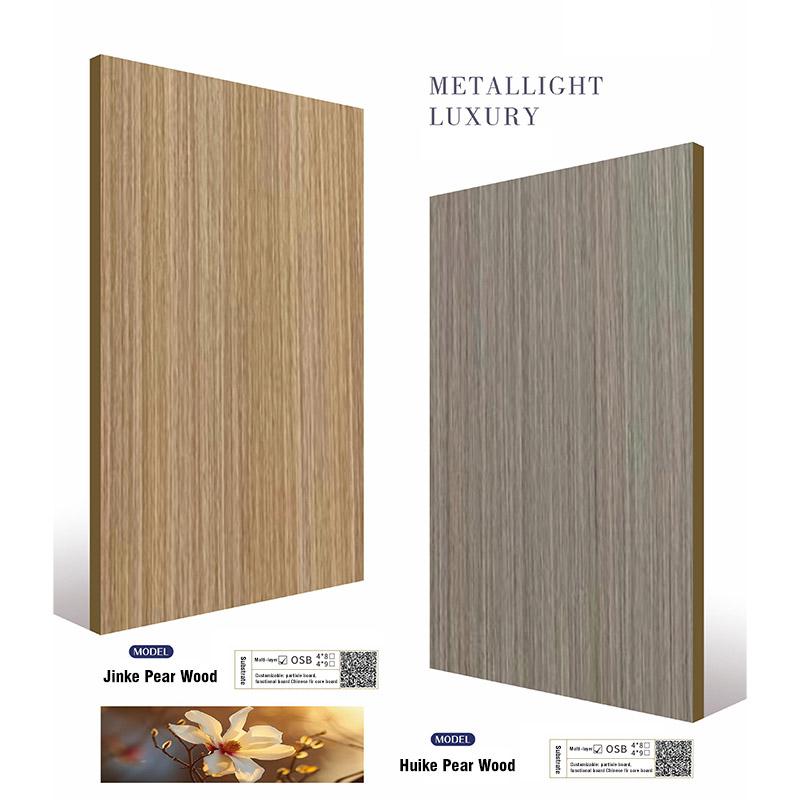


How to ensure a tight bond between semi-light wood grain board substrate and finishing material when they are combined?
Release Time : 2026-02-10
To ensure a tight bond between semi-light wood grain board substrate and veneer material during the lamination process, multiple aspects must be optimized collaboratively, including substrate pretreatment, veneer material compatibility, adhesive selection, process parameter control, environmental management, post-lamination treatment, and quality inspection, to achieve a long-term stable adhesion.
Substrate pretreatment is fundamental to the lamination process. The semi-light wood grain board substrate needs to undergo thickness sanding or fine surface grinding to ensure uniform thickness and surface roughness meeting veneer requirements. This step eliminates minor bumps or depressions on the substrate surface, preventing localized gaps in the veneer material due to insufficient substrate flatness. Simultaneously, oil, wax, glue residue, and other impurities must be thoroughly removed from the substrate surface to prevent hindering adhesive penetration and curing. If the substrate is multi-layer solid wood board or particleboard, its internal bond strength must also be checked to ensure compliance with national standards, preventing delamination after lamination due to internal looseness of the substrate.
The selection of veneer material must match the characteristics of the substrate. The surface materials for semi-light wood grain board are typically veneer, printed decorative paper, or PET film, and their thickness, moisture content, and grain direction must be strictly controlled. For example, if the veneer is too thin (less than 0.3mm), the vascular structure can easily cause glue or base color to show through; if the moisture content is too high (over 12%), the board surface is prone to warping after drying and shrinkage. The grain direction of the surface material should be coordinated with the substrate grain to avoid cracking due to stress differences. For printed decorative paper, it must be ensured that there is no risk of peeling between the printed layer and the adhesive surface of the substrate, and that its water resistance and heat resistance meet the requirements of the usage environment.
The formulation and coating process of the adhesive directly affect the composite strength. For semi-light wood grain board substrates, adhesives that are a mixture of thermosetting and thermoplastic resins should be selected, such as a combination of polyvinyl acetate emulsion glue and urea-formaldehyde resin glue (UF+PVAc), which can provide sufficient initial adhesion and form a durable adhesive layer through hot pressing curing. The amount of adhesive applied must be evenly controlled. Excessive application will result in an overly thick adhesive layer that becomes brittle after curing, easily leading to delamination; insufficient application will cause blistering due to lack of adhesive. The adhesive can be applied using single-sided roller coating or double-sided spraying to ensure the adhesive penetrates into the micropores of the substrate surface, enhancing mechanical adhesion.
Hot-pressing process parameters are the core control point for composite quality. The hot-pressing temperature needs to be adjusted according to the type of adhesive. For example, the hot-pressing temperature of UF+PVAc mixed adhesive is usually controlled at around 110℃. Too low a temperature will result in incomplete curing of the adhesive layer, while too high a temperature may damage the structure of the substrate or finishing material. Hot-pressing pressure must be evenly distributed to avoid excessive local pressure that could cause cracking of the finishing material or deformation of the substrate. The pressing time needs to be determined based on the thickness of the board and the curing speed of the adhesive, ensuring the adhesive layer is fully cured before releasing pressure. After releasing pressure, the boards should be stacked face-to-face to allow the residual heat to slowly cool the adhesive layer, reducing shrinkage stress caused by moisture evaporation.
Environmental conditions have a significant impact on the lamination process. The production workshop temperature must be maintained between 20-30℃, and humidity controlled between 55%-65% to prevent the surface material from absorbing moisture and expanding due to excessive humidity, or from attracting dust due to static electricity due to insufficient humidity. If a wet-lay process is used, the moisture content of the veneer or decorative paper must be balanced with the ambient humidity to prevent cracking at the seams caused by drying shrinkage. Furthermore, workshop cleanliness must be strictly controlled. After applying adhesive, dust particles must be prevented from settling on the board surface, otherwise, granular protrusions will form, affecting the flatness of the composite.
Post-lamination processing can further improve the bonding tightness. For example, sanding the composite board to a fixed thickness can eliminate minor surface protrusions and improve flatness; edge banding can be used to seal the edges of the board to prevent moisture penetration and adhesive aging. If localized delamination or bubbling occurs during the lamination process, it must be repaired promptly: use a sharp blade to cut the veneer along the wood grain to release air, inject strong adhesive, and then flatten with an iron; for large-area delamination, the cause must be analyzed, and the adhesive formula or process parameters adjusted before re-lamination.
Quality inspection is the last line of defense to ensure the lamination effect. Visually inspect the board surface for flatness, absence of dents, pits, cracks, or other defects; touch to confirm the absence of granular protrusions; use the "tapping and listening method" to determine if delamination is present; and conduct a peel strength test if necessary to ensure the adhesive layer can withstand standard tensile force without detaching. Only boards that pass rigorous testing can guarantee stable bonding performance during long-term use.